How Long Does a Remap Take? What Happens on the Day
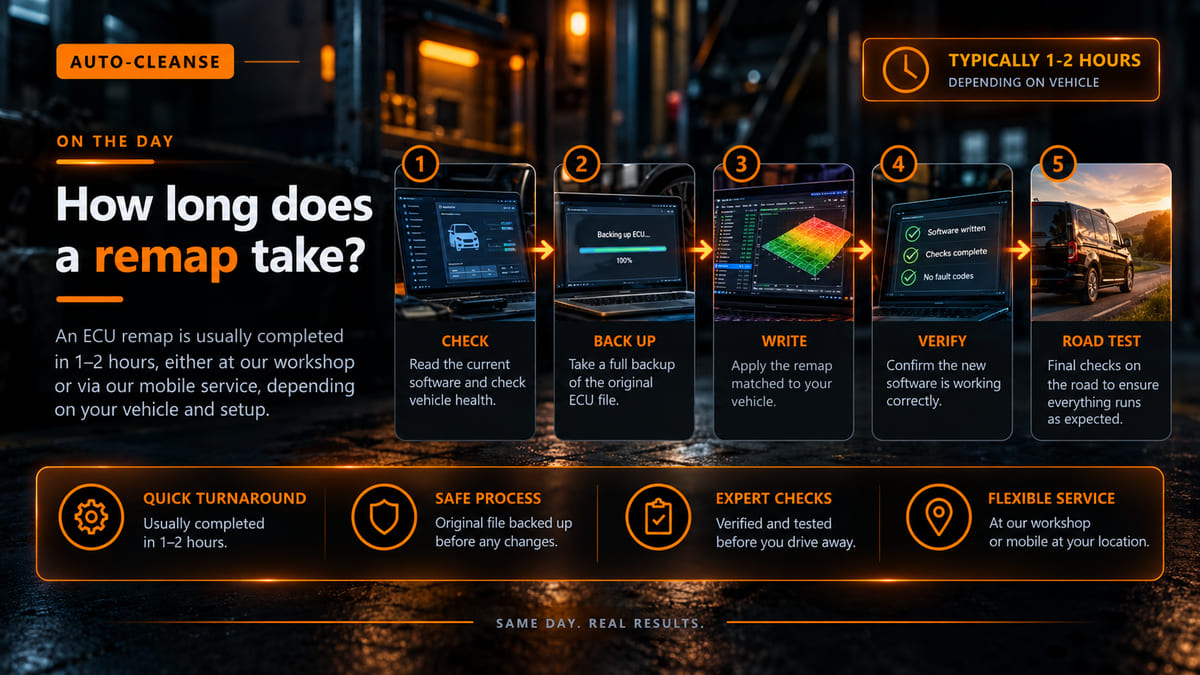
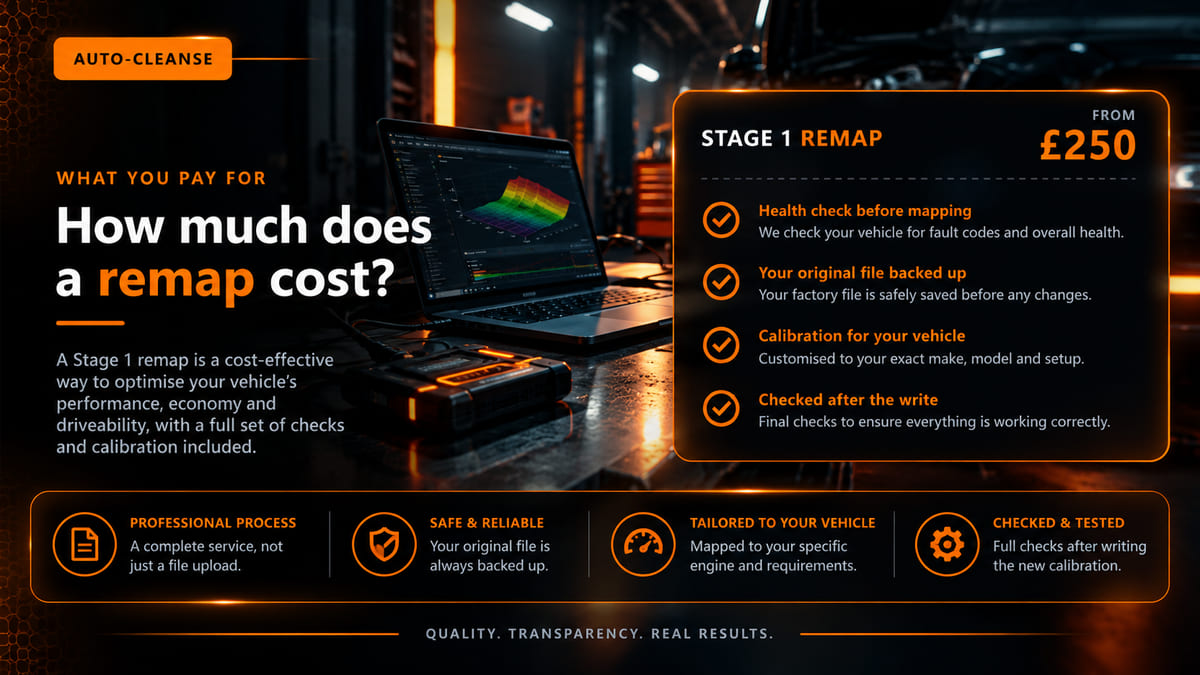
How long does a remap take? Usually 1-2 hours from start to finish. That covers the diagnostic health check, reading and backing up the original file, writing the new calibration and checking the vehicle afterwards. If the health check finds a DPF, EGR or AdBlue fault, we quote to repair that first and the remap waits until it is fixed. An ECU that has to come out of the vehicle to be programmed also takes longer.
How long does a remap take, step by step?
1. Talking it through
Before anything is plugged in, the technician should ask about the vehicle: known faults, warning lights, previous work and how you use it. A few minutes here saves surprises later.
2. The diagnostic health check
Fault memory and live data are checked to confirm the engine is healthy enough to remap. At Auto-Cleanse this is a paid check, and we only go ahead on a healthy engine. The reasons are set out in why vehicle condition matters before a remap.
3. Reading and backing up the original file
The software in your ECU is read out and stored before anything is changed. That original is your route back to stock, which is why the original ECU file is always backed up.
4. Writing the calibration
The calibration matched to your vehicle is written to the ECU, and what changes during a Stage 1 remap covers what is actually in that file. Programming erases and rewrites the ECU's memory, and manufacturer procedures, such as Porsche's, stress keeping the supply voltage steady throughout because a drop can abort the write. So the vehicle is left alone during the write, with nothing switched on that draws power or disturbs the connection.
5. The check afterwards
Before you drive away, the fault memory is scanned again with the new calibration in place. Every remap we do has a diagnostic check before and after, so that second scan is always part of the job.
Why do quoted remap times vary so much?
Because they are not always timing the same thing. Some quoted times cover only writing the file, while a full job also includes the health check, the backup and the checks afterwards. A remap done on a rolling road adds runs before the map is loaded, to set a baseline, and again once it is in. Bench work and Stage 2 hardware add more.
When comparing remap times, ask what the quoted time includes. Writing the file is only one step.
What can make a remap take longer?
Faults found in the health check
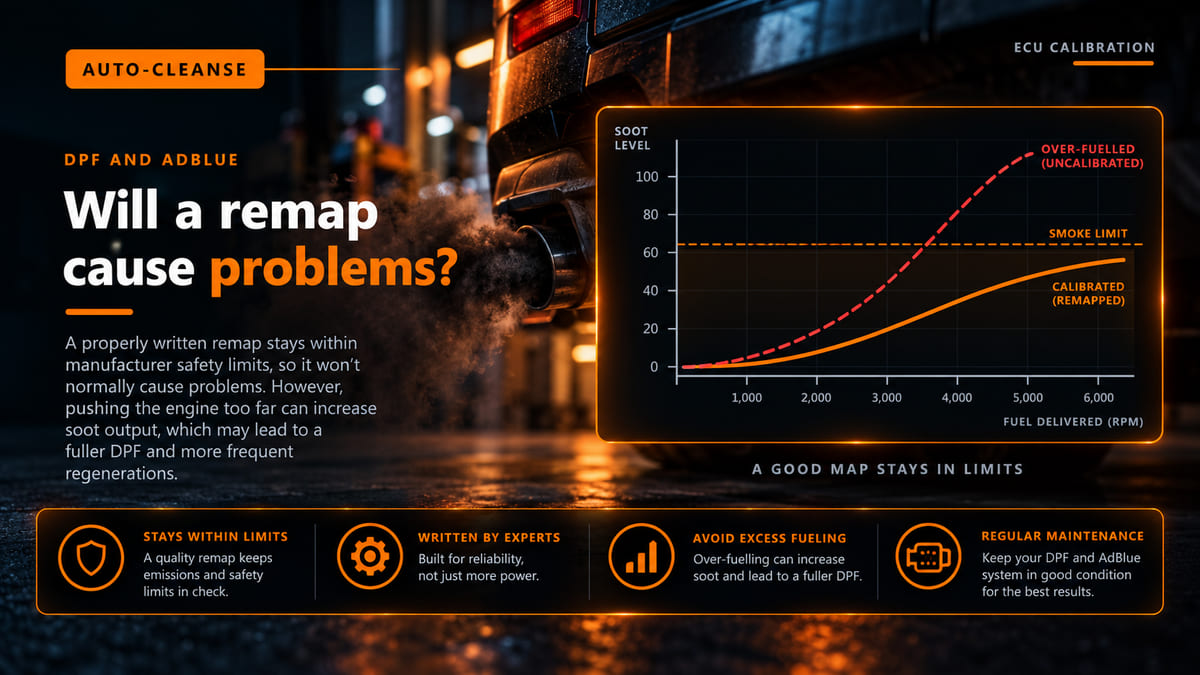
If the check finds a problem - a DPF loading fast, a sticking EGR valve, a boost leak, an AdBlue fault - the right call is to stop and fix that first. We quote to repair a DPF, EGR or AdBlue fault before mapping, so the remap waits until that is fixed. Ask us how that affects your booking.
ECUs that have to come out of the vehicle
Most ECUs are read and written through the diagnostic (OBD) socket with the unit left in place. A minority will not accept programming that way, or carry software protection, and have to be removed and bench-flashed through their own connector.
Some protected units also have to be opened up for direct access to their memory. This is called boot mode, after the processor's low-level start-up mode - nothing to do with the car's boot. Removing, connecting and refitting an ECU adds time.
Workshop or mobile remapping?
Mobile remapping brings the job to your home, driveway or workplace in Devon. Our mobile ECU remapping service uses the same OBD and bench equipment as the workshop, and a Stage 1 costs £270 mobile against £250 at Totnes - what a Stage 1 price should include covers the rest.
Plan for the same 1-2 hours on a mobile visit, and ask when you book if anything is needed on the day.
When the workshop may be the better option
A minority of ECUs have to be removed and bench-flashed, which takes longer, and some Stage 2 work is better done at the Totnes workshop. If you are not sure whether yours is a mobile or workshop job, ask when you book.
What to bring and what to tell the technician
The more the technician knows before the health check, the quicker and more accurate it is.
- Known faults and warning lights, including ones that come and go, and any codes you have already had read.
- Previous work, such as an earlier remap, a replacement ECU, or hardware changes to the intake, intercooler or exhaust.
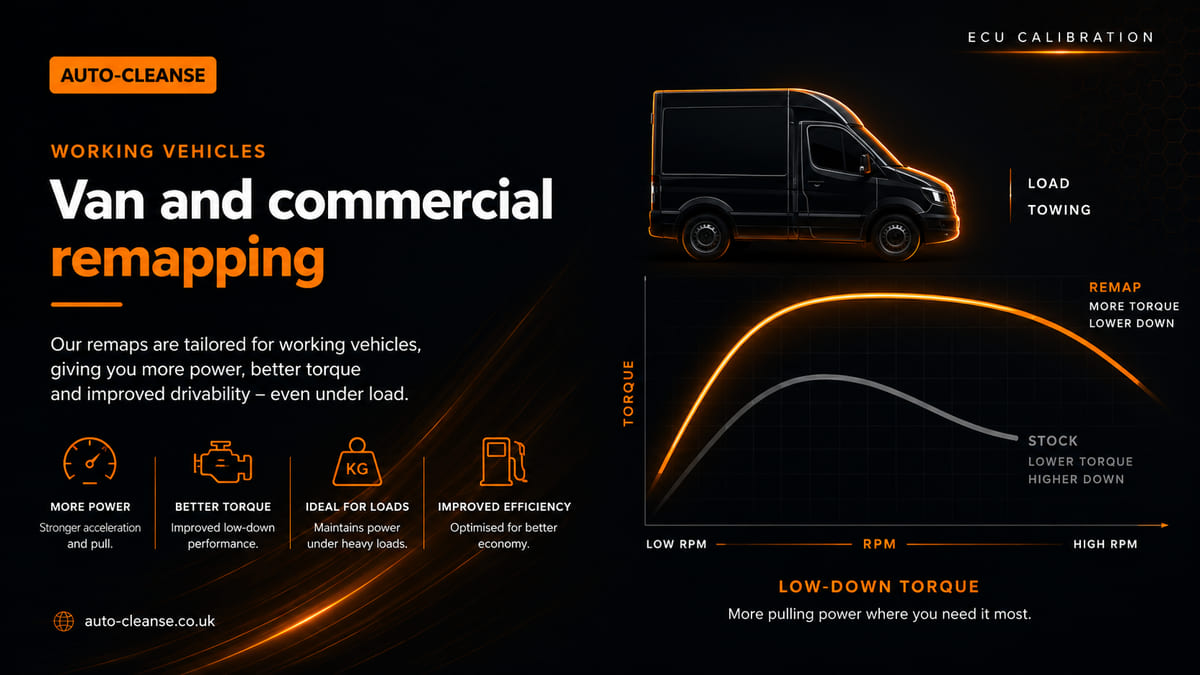
- How you use the vehicle - towing, long motorway runs, short trips or heavy loads. That shapes the calibration.
- Battery condition - slow starting, a recent flat battery or a new battery.
- Recent repairs, such as a DPF clean or a recent service.
- Service history, if you have it to hand. It gives useful context for the health check.
Common mistake: saying nothing about a warning light that "only comes on sometimes". An intermittent fault is exactly what the health check needs to know about, and far better found before the remap than blamed on it afterwards.
After the remap: does it need running in?
No. A Stage 1 changes the calibration, not the engine's hardware, so there is no running-in period. You may read that a remap needs time to settle in, but a warning light, a change in how it starts or idles, or any smoke is worth reporting to the technician straight away rather than waiting to see if it clears.
Then declare the remap to your insurer. It is a modification, and remapping and your insurance explains what to tell them and when - ideally before the work, or as soon as it is done.
How Auto-Cleanse can help
You can book through our remapping booking page with a £50 deposit to secure the slot and the balance paid on the day, or call 07823 649190. Every remap starts with a diagnostic health check, included in the Stage 1 price, the file is matched to the exact vehicle, and the original is backed up so the car can be returned to stock.
Frequently asked questions
How long does a mobile remap take?
Typically 1-2 hours, the same as at the workshop. If the health check finds a fault, the remap waits until it is repaired, and an ECU that has to come out for bench work takes longer.
Does a bench remap take longer?
Yes. Removing the ECU, connecting to it directly and refitting it takes longer than working through the diagnostic socket, but it is the only route on some ECUs - and a few protected units also have to be opened up. Ask when you book whether yours is one of them.
How long does a Stage 2 remap take?
There is no single figure. Stage 2 is a calibration matched to changed hardware, so the time depends on the hardware fitted and the supporting work it needs. It is quoted for the vehicle, and some Stage 2 work is better done at the Totnes workshop, so ask when you book.
Can I drive straight away after a remap?
Yes, once the checks after the write are complete. There is no running-in period, but report any warning light or change in running promptly.
The takeaway
Plan for 1-2 hours. A fault found in the health check is repaired before the remap goes on, and bench work takes longer. Tell the technician everything you know about the vehicle, leave it alone during the write, and declare the remap to your insurer afterwards.
Sources
- Alientech - KESS3 OBD, bench and boot programming modes
- VIEZU - boot and bench programming of protected Bosch ECUs, and dyno remapping
- Porsche Cars North America - service bulletins on control unit programming and vehicle voltage
General technical guidance only. Manufacturer-specific handbook information, workshop procedures and specifications always take precedence.
Need help with this on your vehicle?
Auto-Cleanse can sort it. See our Mobile ECU Remapping service, or get in touch.
Related: ECU Remapping · Remapping Booking