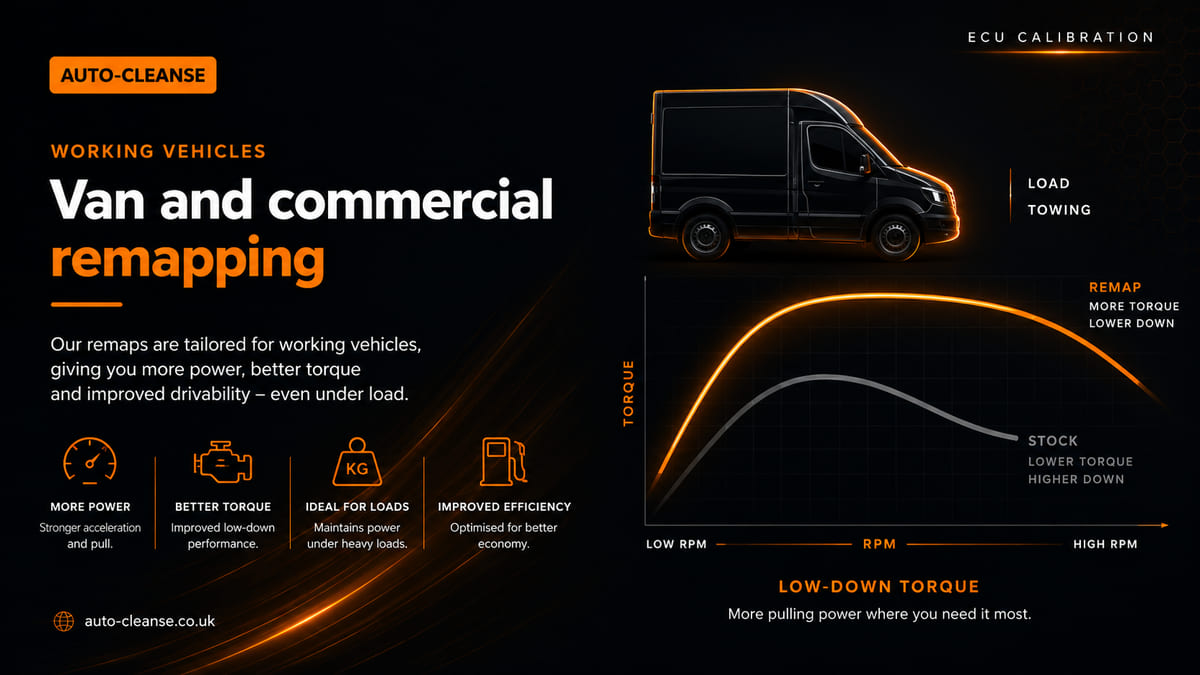
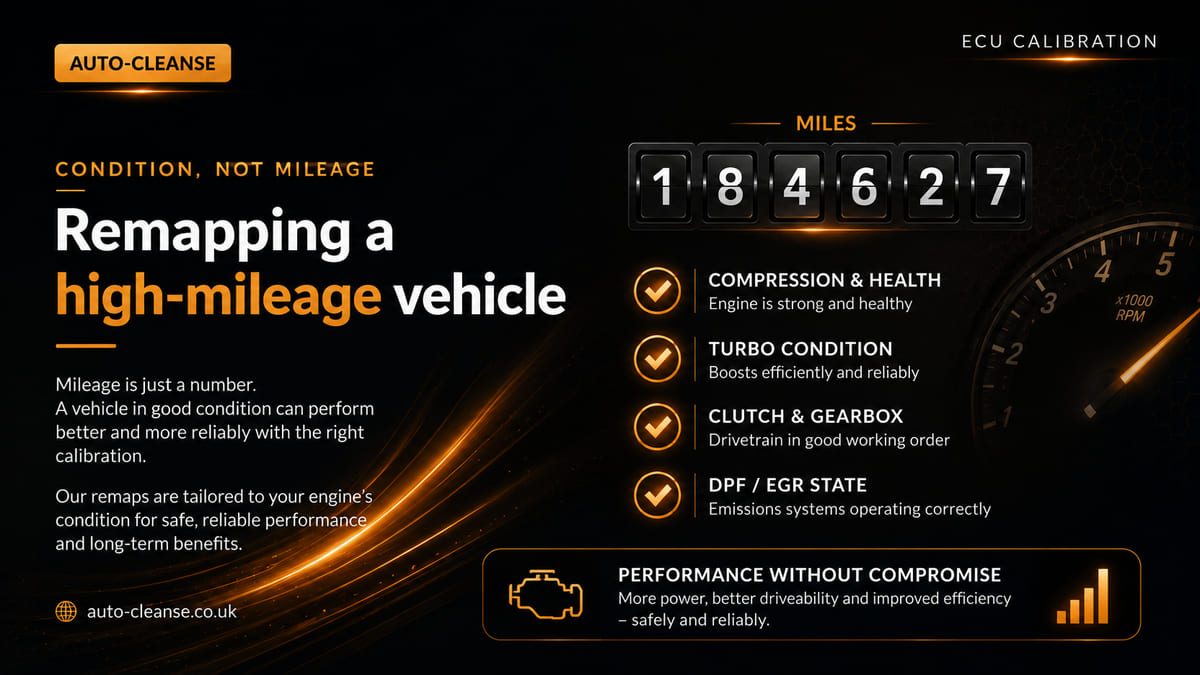
What Actually Changes During a Stage 1 Remap?
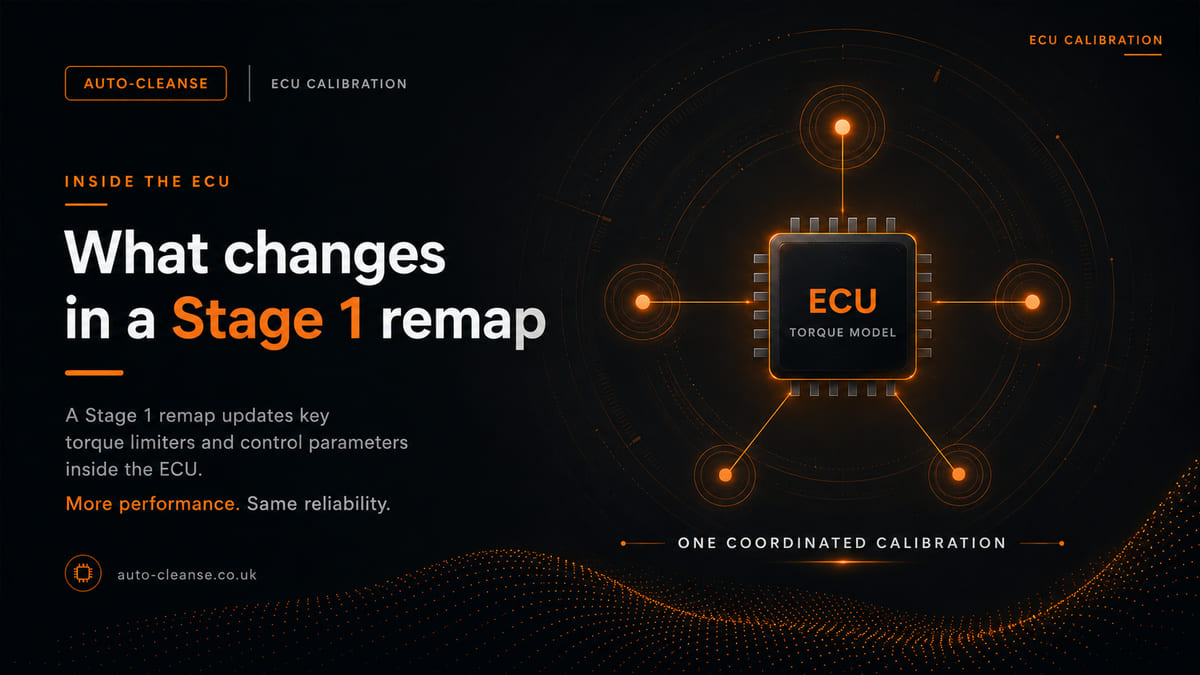
A modern engine ECU does far more than add fuel or control boost. It coordinates torque requests, air, fuel, combustion, emissions, diagnostics and communication with other vehicle systems. A Stage 1 remap is a recalibration of that coordinated system, not simply one boost or fuel value being increased in isolation.
A proper Stage 1 is a coordinated recalibration. Increasing one value without reviewing the systems around it is not a complete calibration strategy.
The ECU works in requests and limits
On many modern systems, the accelerator pedal is interpreted as a driver request rather than a direct command for a fixed throttle opening or fuel quantity. The ECU coordinates that request with torque limits, transmission requests, traction control, emissions requirements and component protection before it operates the available actuators.
- Driver request - how pedal position is translated into requested response or torque.
- Torque limits - the permitted output under different speeds, gears, temperatures and conditions.
- Torque delivery - how air, fuel, ignition, injection and boost are coordinated to achieve it.
This is why proper ECU remapping works with all three of these layers together rather than editing a single table and hoping the rest of the system tolerates it.
What may be recalibrated: the main control areas
1. Driver demand and torque structure
Calibration may alter the relationship between pedal input, requested torque and the limiters that govern available output. These areas must agree with each other, or the ECU can intervene, limit output or produce inconsistent torque reporting.
2. Airflow, load and boost
On a turbocharged application, relevant changes may include requested load, boost targets, wastegate or vane control and supporting limiters. The requested value must remain realistic for the turbocharger, air system, temperatures and the ECU's control strategy - more air still has to be controlled, measured and achievable.
3. Fuel and combustion
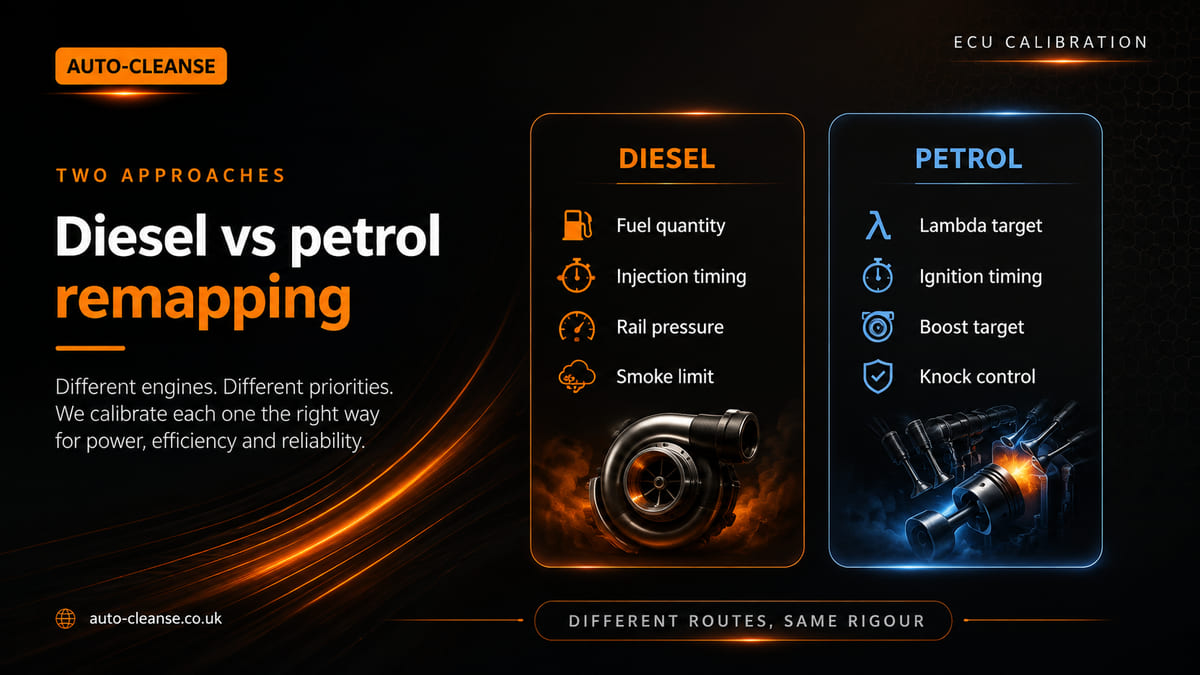
Petrol and diesel ECUs take different routes. A petrol calibration may involve load, fuel or lambda targets and ignition timing. A diesel calibration may involve fuel quantity, injection timing, rail-pressure requests, smoke or air-mass limitation and turbo control. Not every one of these areas needs changing on every vehicle - the correct combination depends on the engine, ECU software, hardware and intended result.
4. Transmission and torque reporting
The engine ECU does not work alone. Automatic transmissions, stability systems and other controllers can request or limit engine torque. A sound calibration respects those interfaces and the vehicle's torque-monitoring logic, rather than treating the engine as an isolated system.
5. Protection, diagnostics and validation
Knock response, temperature protection, air-fuel control, torque monitoring, fault detection and other safety strategies are part of the complete system. Any legitimate changes to limits must be justified, coordinated and validated - not simply switched off to prevent intervention. This is part of why proper validation matters, whether that is on a rolling road or during a mobile ECU remapping visit.
What a Stage 1 should not mean
- One table increased in isolation. The connected requests, limits and control paths still need to agree with each other.
- A fixed recipe for every vehicle. Two similar engines can use different ECU software, hardware, gearboxes or factory calibrations.
- Ignoring existing faults. Extra requested load can expose weak boost, cooling, ignition, fuelling or transmission systems.
- Chasing only the peak number. Controlled torque delivery, repeatability and drivability matter across the operating range, not just at one point on the curve.
The takeaway
A good remap makes the control system agree with itself. The aim is not simply to request more - it is to deliver the intended result through a coherent, vehicle-specific calibration.
Sources
- Bosch Mobility: Electronic engine control unit and gasoline direct injection system
- Bosch Motorsport: MS 6 gasoline ECU and MS 25 Sport diesel ECU documentation
- SAE Technical Paper 980801: Bosch ME7 engine-management structure
- ASAM MCD-1 XCP: ECU measurement, calibration and programming standard
- Haltech technical documentation: target lambda, ignition and boost-control calibration
General technical guidance only. The exact maps, definitions, limits and validation procedures vary by ECU, software version, engine, transmission and vehicle. Manufacturer information and competent calibration practice take precedence.
Need help with this on your vehicle?
Auto-Cleanse can sort it. See our ECU Remapping service, or get in touch.
Related: Stage 1 Remaps in Devon · Mobile ECU Remapping