Remapping and Your Insurance: What You Must Declare
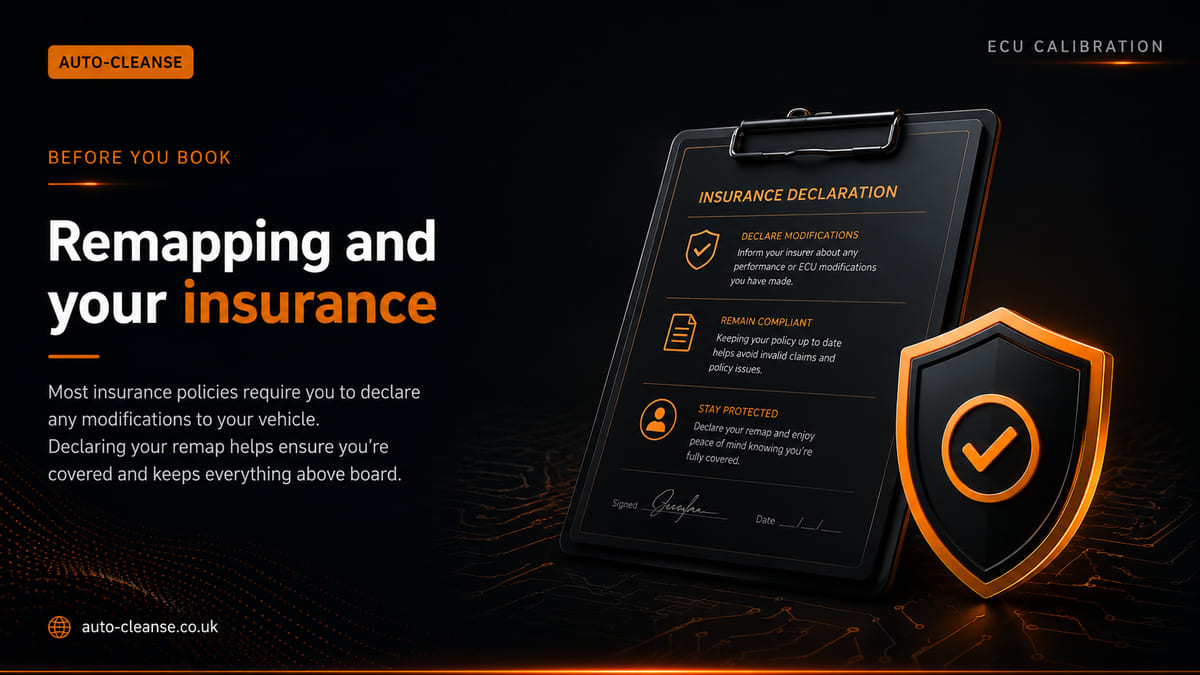
A remap changes how the engine management system is calibrated. In insurance terms that makes it a modification, in the same way as a suspension change, a different wheel and tyre package, or an aftermarket exhaust. It makes no difference that the change is invisible from the outside, that the vehicle drives normally, or that the intention was better economy and towing rather than more power.
Owners get this part wrong more often than any other, and it carries the heaviest consequences. The work itself is straightforward. The paperwork around it is what protects you months later.
A remap is a modification, and an undeclared modification is a problem waiting for a claim.
Why a remap counts as a modification
Insurers price a policy on the vehicle as the manufacturer built it, using the recorded specification for that variant. When the ECU calibration is changed, the vehicle no longer matches that recorded specification. Torque delivery, power output and the way the vehicle behaves under load can all differ from the standard figures the quotation was based on.
Some insurers take a relaxed view of a modest, well-executed calibration change on a diesel. Others treat any engine modification as a significant change in risk. Either way the judgement belongs to the underwriter, not the owner, and it can only be made if they have been told.
What non-disclosure actually risks
Under UK consumer insurance rules you have a duty to take reasonable care not to give the insurer a misleading picture of the vehicle and the risk. Failing to declare a modification, or answering a modification question inaccurately, can fall foul of that duty.
The practical consequences fall into four categories:
- A claim is reduced or refused. The insurer may decline to pay, or settle on the terms it would have offered had it known.
- The policy is treated as void from the start. In more serious cases the insurer may treat the policy as if it had never existed, leaving you uninsured for the period in question. Whether the premium is returned depends on how the misrepresentation is judged, and it may not be.
- Future declarations become harder. A refused claim or a voided policy is normally something you have to disclose on every subsequent application for years afterwards.
- Third-party exposure remains. Even where the insurer has to meet a third-party claim, it may be entitled to recover what it has paid out from the policyholder.
None of that is a reason to avoid remapping. It is a reason to declare it properly.
Common misunderstanding: "I will just have it put back to standard before the renewal." Reverting to the original calibration changes the vehicle going forward. It does not undo a period in which the insurer was not told, and it does not repair an inaccurate answer already given on a proposal form. On many vehicles the reprogramming can still be identified afterwards, and the work remains in the workshop's records and the file history.
What to declare, and when
- Tell the insurer before the work is done, or as soon as it is done. Do not wait for renewal. Most policies require notification of a change in the vehicle during the policy term.
- Describe the work accurately. Say what type of calibration change has been made, whether any hardware has changed, and who carried it out.
- Answer any power or torque question honestly. If you do not have reliable figures, say so rather than guessing. A performance lookup for the standard specification is a sensible starting point.
- Get the change confirmed in writing. Keep the amended schedule or written confirmation with your policy documents.
- Repeat the declaration at every renewal and on every new quote. A modification declared once does not carry over automatically to a different insurer or a new policy.
This is usually less painful than owners expect. Many mainstream insurers will consider a properly declared calibration change, and a specialist modified-vehicle market covers the cases they will not take. Declaring can raise the premium or narrow the choice of insurer, but plenty of owners find the difference smaller than they feared. Asking costs very little. Not asking can cost an entire claim.
Leasing, finance and company vehicles
If the vehicle is on lease, contract hire, hire purchase or PCP, you are not yet the legal owner and you are not free to modify it without permission.
Leasing and contract hire
These agreements normally require the vehicle to be returned in standard specification, and commonly prohibit engine or software modification outright. Charges at the end of the contract, or a demand to reinstate the original calibration, are realistic outcomes.
Hire purchase and PCP
Finance terms often carry similar restrictions, and a modification made without consent can put you in breach of the agreement.
Company and fleet vehicles
These may sit on a fleet policy with its own modification rules, and the decision belongs to the operator, not the driver.
Ask the provider in writing before the work is booked. If the answer is no, that is the end of it. Settle ownership status before enquiring about a Stage 1 calibration - far better to establish the position at the start than at the end of an agreement.
The takeaway
Declare a remap to your insurer, and to your finance or leasing provider if the vehicle is not outright yours. Undeclared modifications are the cheapest thing to fix before a claim and the most expensive thing to explain after one.
Sources
- Financial Ombudsman Service - non-disclosure and misrepresentation in consumer insurance
- Financial Conduct Authority - conduct rules for insurance sales and consumer disclosure
- Association of British Insurers - guidance on vehicle modifications and policy disclosure
- British Vehicle Rental and Leasing Association - contract hire and leasing terms on vehicle condition
- GOV.UK - compulsory motor insurance and driver responsibilities
General guidance only, not legal or financial advice. Your policy wording, finance agreement and insurer's own requirements always take precedence.
Need help with this on your vehicle?
Auto-Cleanse can sort it. See our ECU Remapping service, or get in touch.
Related: Stage 1 Remaps in Devon