When Does a DPF Need Off-Vehicle Cleaning?
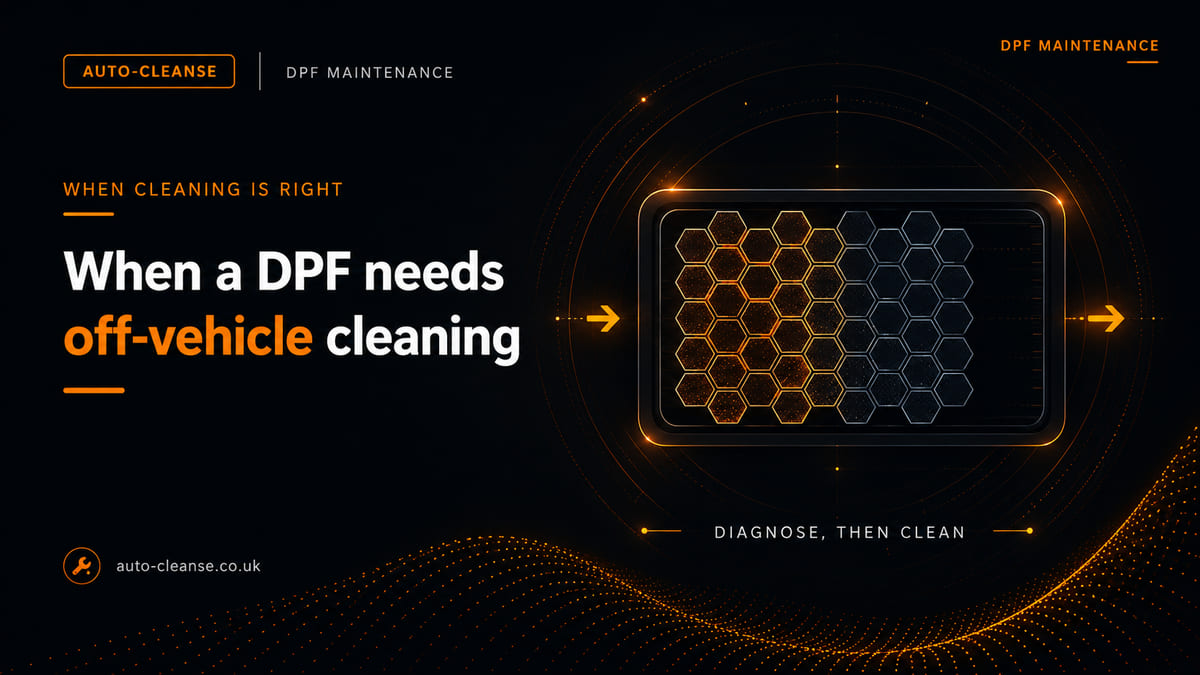
Regeneration and off-vehicle cleaning solve different problems. One deals with combustible soot inside the filter; the other physically removes material that regeneration was never going to shift. Deciding which is needed - and whether the filter is even worth cleaning - depends on what is inside it, why it got there, and whether the substrate is still sound.
Regeneration primarily deals with combustible soot. Off-vehicle cleaning is considered when a suitable filter contains ash or retained material that must be physically removed.
Soot and ash are different
A DPF traps particulate matter in its porous wall-flow structure, but not everything trapped in it behaves the same way.
Soot
Combustible loading produced by combustion and trapped by the filter. A correctly controlled regeneration can oxidise much of this material.
Ash
Non-combustible residue derived mainly from lubricant additives, with smaller contributions from fuel, engine wear and corrosion. It remains after soot oxidation and is not removed by normal regeneration.
Why cleaning becomes necessary
Ash does not burn away, so it changes the filter gradually over its service life.
1. Reduced available volume
Deposits can form along channel walls and towards channel ends. This reduces the volume available for future soot storage and can alter the filter's flow characteristics.
2. Increasing maintenance need
A successful regeneration can lower soot loading while the accumulated ash remains. Eventually the filter may require removal and cleaning according to the manufacturer's procedure and service criteria.
Five signs that support off-vehicle assessment
This is decision support, not a universal pass or fail rule.
- Scheduled ash maintenance is due. The applicable manufacturer procedure identifies inspection, cleaning or replacement based on that vehicle's service requirements.
- Restriction remains after soot has been addressed. A safe, successful regeneration has reduced soot, but verified flow or restriction remains outside the relevant specification.
- Regeneration frequency remains abnormal. The filter repeatedly reaches its trigger condition after engine, sensor and operating faults have been investigated.
- Pre-clean testing supports a removable restriction. Inspection and flow testing indicate that the filter is restricted but potentially serviceable.
- The substrate appears structurally intact. There is no evidence that cracking, melting or internal collapse has already made replacement the appropriate repair.
Common misdiagnosis: "The filter is restricted, so it needs cleaning." Physical cleaning cannot repair a cracked or melted ceramic substrate. Cummins guidance states that cracked or melted DPFs should be replaced, and filters affected by substantial oil, coolant or uncontrolled thermal damage also require application-specific inspection and may be unsuitable for reuse.
Confirm the diagnosis first
Three things need checking before a filter is condemned or sent for cleaning.
Measurement
Verify the pressure sensor, hoses, wiring and exhaust integrity before trusting restriction data.
Root cause
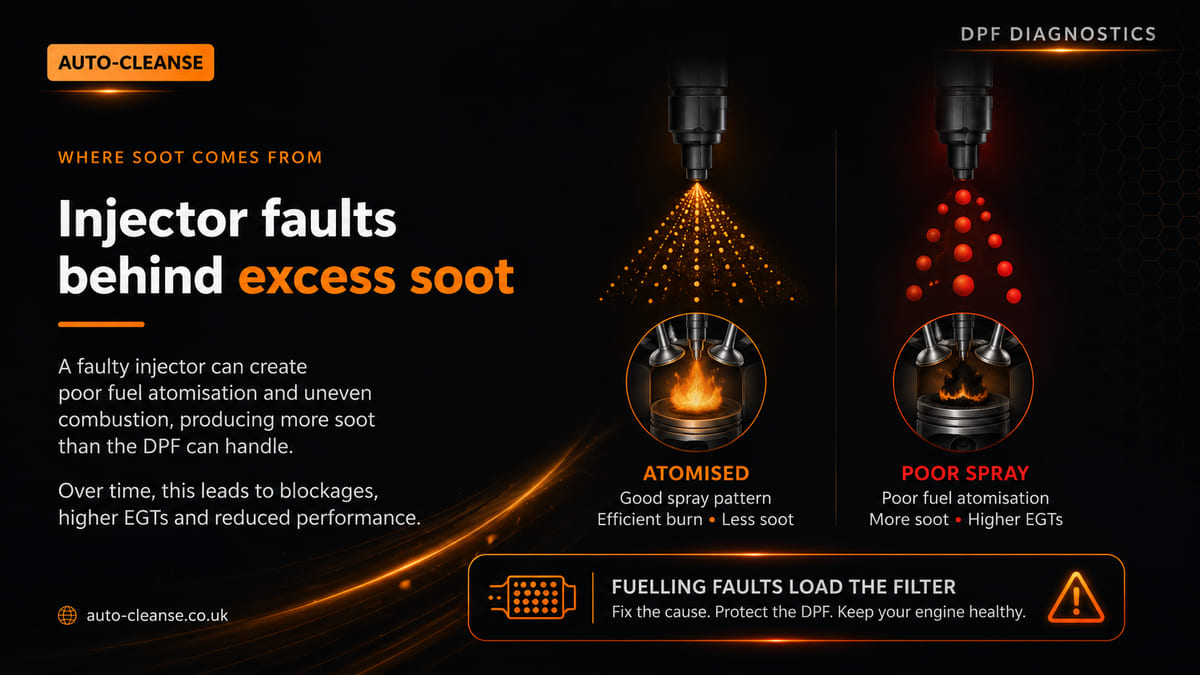
Investigate excess soot production, oil consumption, failed regeneration and temperature faults.
Suitability
Inspect the filter and use the correct cleaning method for its construction and condition.
A defensible process
- Vehicle diagnosis. Establish the fault context and correct the reason for abnormal loading.
- Pre-clean inspection and flow test. Record condition and establish a baseline before treatment.
- Controlled cleaning. Use a process appropriate to the filter and the material being removed.
- Drying and reinspection. Confirm that the unit is dry and no visible damage has been introduced or uncovered.
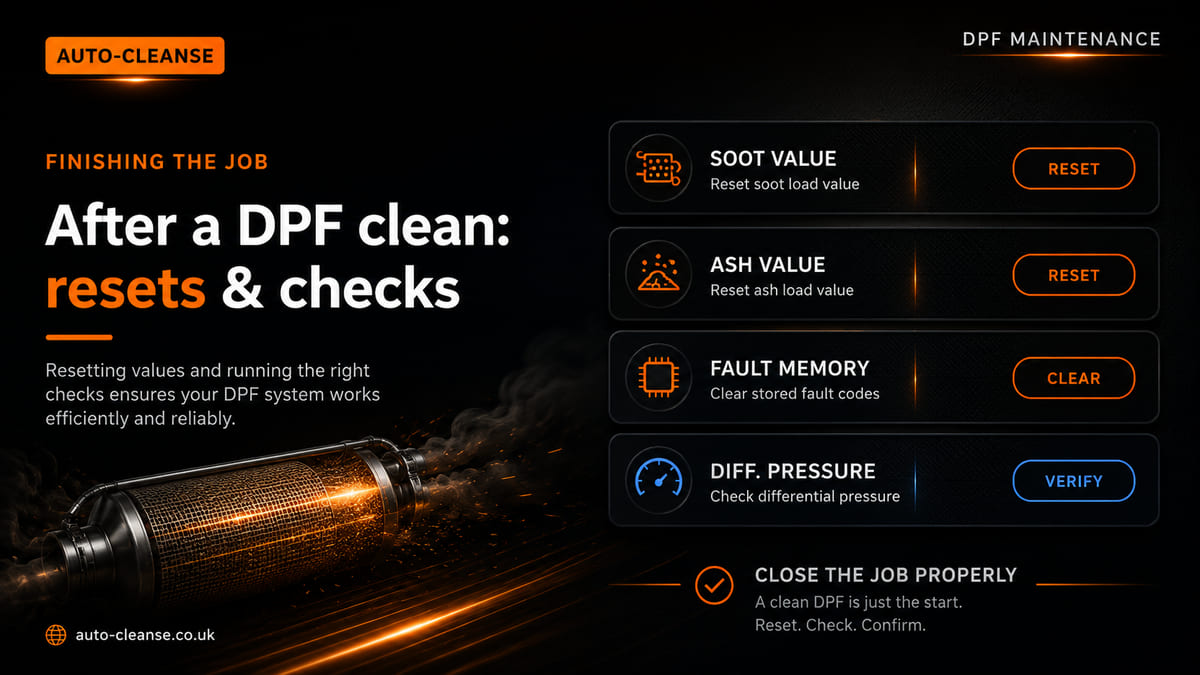
- Post-clean verification. Repeat the flow test and report the before and after result.
This is the same sequence behind a proper off-vehicle DPF clean: diagnosis and a baseline test come first, cleaning is controlled to the filter's construction, and the result is verified rather than assumed. Where a filter cannot come off the vehicle locally, our postal DPF cleaning service applies the same inspection and flow-test steps once it arrives.
The takeaway
The restriction must be identified before the remedy is chosen. Regeneration, off-vehicle cleaning and replacement solve different problems, and a reliable decision combines vehicle diagnosis, filter inspection and objective testing rather than treating every blocked DPF as the same job.
Sources
- Cummins Emission Solutions: aftertreatment system fundamentals and scheduled ash cleaning
- Cummins Parts Professional 65: DPF construction, ash cleaning and replacement of cracked or melted filters
- US EPA Technical Bulletin EPA-420-F-09-009: DPF operation, regeneration, ash cleaning and engine maintenance
- DieselNet: Ash Accumulation in Diesel Particulate Filters
- Fox, Yang and Hunsicker: Diesel Particulate Filter Cleaning Effectiveness, Emission Control Science and Technology
General technical guidance only. Cleaning intervals, diagnostic limits, permitted procedures and reuse criteria vary by manufacturer, engine, filter construction and software strategy. Manufacturer workshop information always takes precedence.
Need help with this on your vehicle?
Auto-Cleanse can sort it. See our DPF Cleaning in Devon service, or get in touch.
Related: Blocked DPF Cleaning · Nationwide Postal DPF