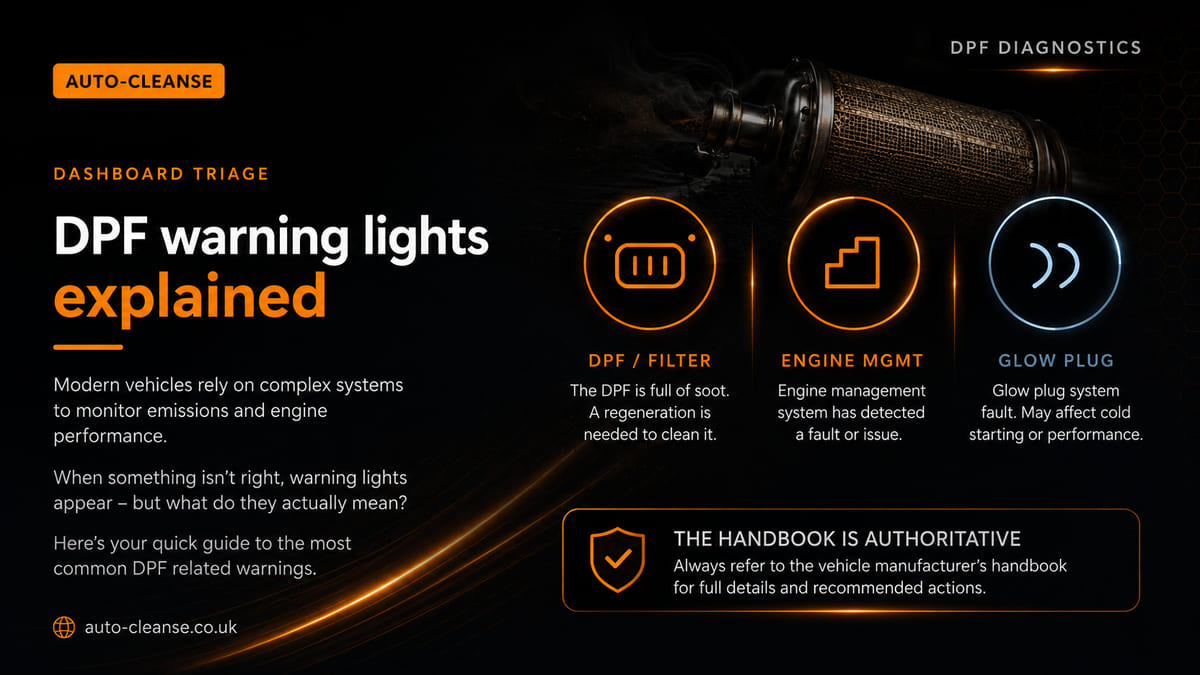
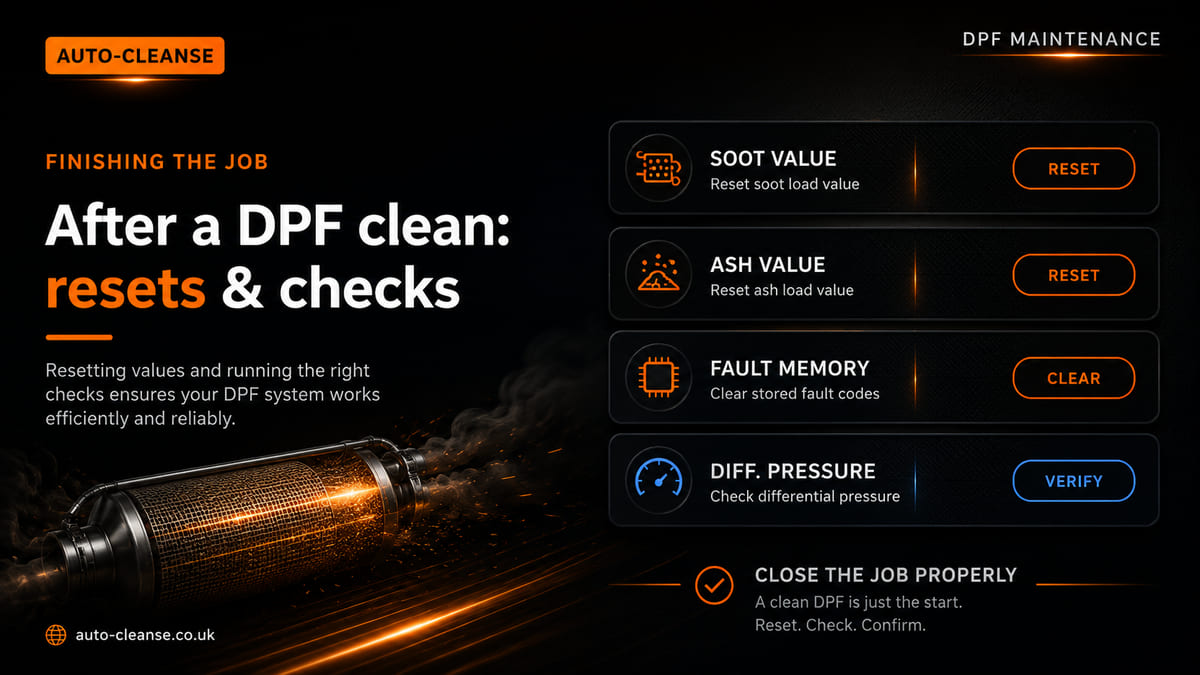
Soot, Ash, Contamination or Physical Damage? Diagnosing a Restricted DPF
A restricted DPF is not one problem - it is a description of an outcome. A differential pressure reading shows that exhaust flow is being resisted, but on its own it does not say whether the cause is soot, accumulated ash, abnormal deposits from an upstream fault, or a substrate that has physically failed.
Each of those four causes needs a different repair, and treating them as interchangeable is where misdiagnosis happens. Soot can be oxidised by regeneration. Ash has to be physically removed. Abnormal deposits point to a fault elsewhere in the engine. Structural damage cannot be cleaned away at all.
A pressure reading shows that flow is restricted - it does not show what is causing the restriction.
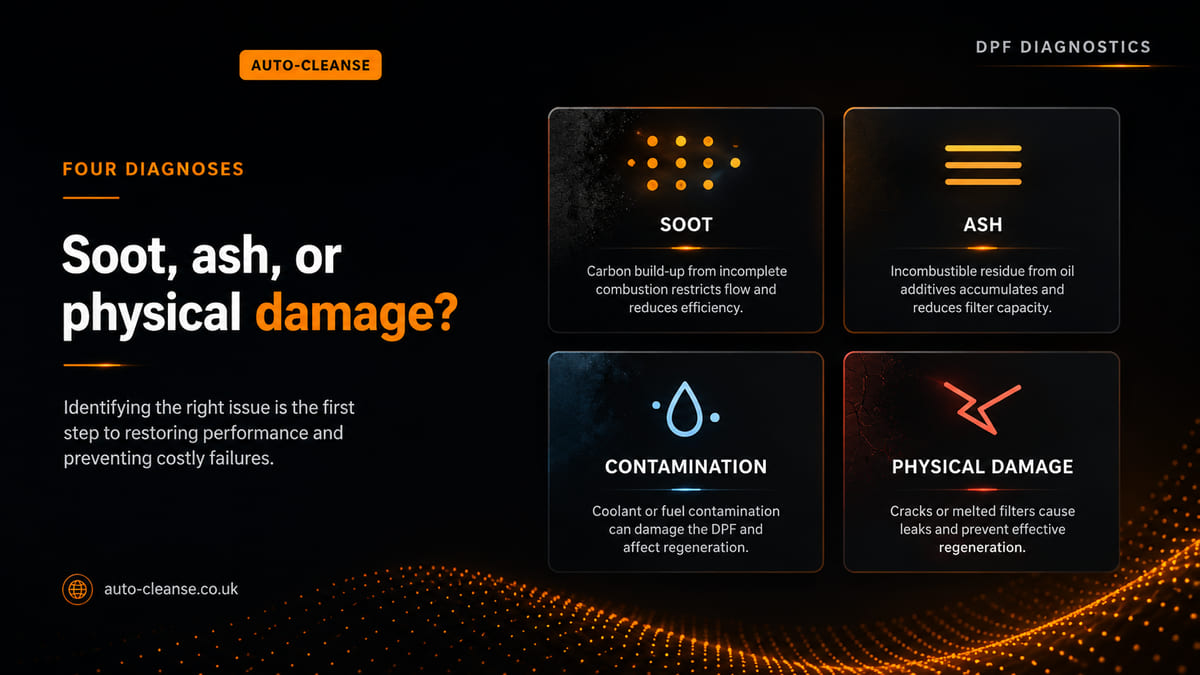
Four things that can restrict a DPF
"Blocked DPF" describes a condition, not a diagnosis. These are the four underlying causes, and they do not all need the same repair.
1. Soot - combustible particulate
The DPF traps particulate matter from the exhaust as it passes through. Regeneration is designed to oxidise the combustible soot component once the system's required operating conditions are met.
2. Ash - non-combustible residue
Ash remains after regeneration and gradually accumulates over the life of the filter. It cannot be burned away, so long-term ash loading has to be dealt with by appropriate off-vehicle cleaning or filter replacement when required.
3. Abnormal deposits
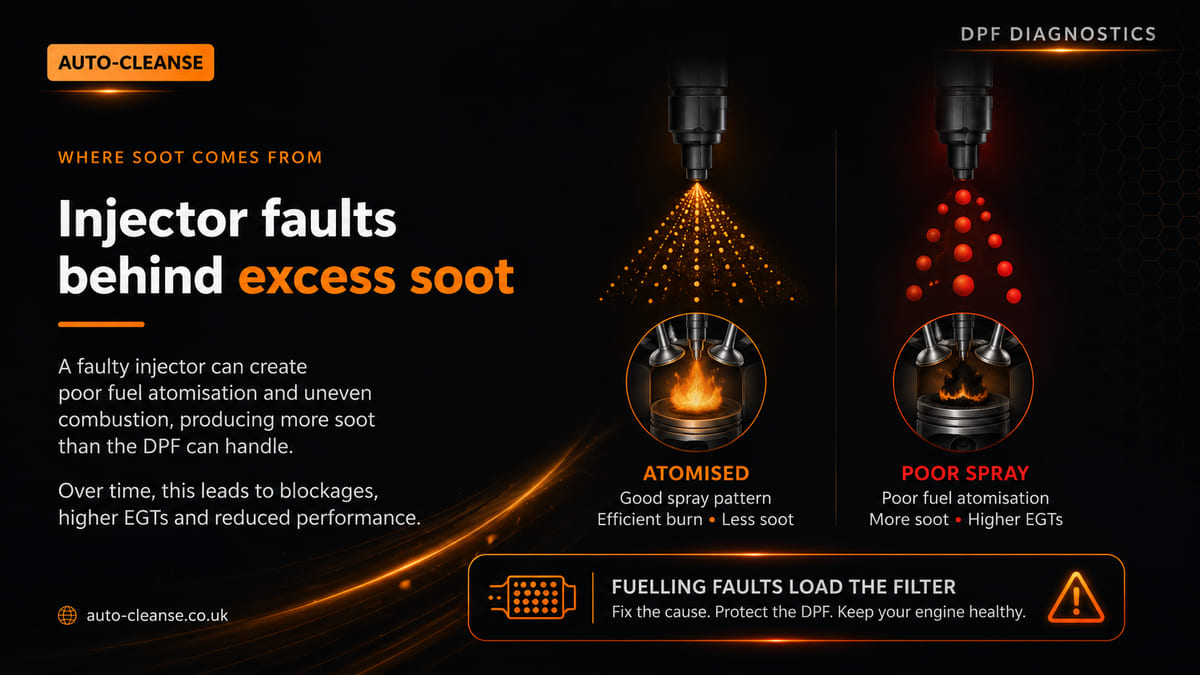
Poor combustion, injector faults or increased oil consumption can cause abnormal particulate loading and may damage the DPF. Cleaning the filter without correcting the underlying engine fault can set up a repeat failure.
4. Physical damage
Excessive thermal loading can contribute to cracking or melting of the substrate. A cleaning process can remove deposits from a filter that is otherwise sound, but it cannot reconstruct a cracked, melted or otherwise structurally failed ceramic core.
Soot versus ash: two different repair routes
Combustible soot is accumulated particulate from combustion, and regeneration - where permitted - is the appropriate route for it. Non-combustible ash is the residue left behind once that soot has been oxidised, and it needs an off-vehicle service route instead.
Non-combustible material from lubrication oil and fuel additives is a documented contributor to DPF ash accumulation. The exact rate depends on the engine, the lubricant specification, oil consumption, duty cycle and aftertreatment design, which is why using the correct manufacturer-approved lubricant for the application matters.
Why pressure data alone doesn't identify the cause
A differential pressure sensor measures the pressure drop across the filter and supports assessment of filter loading. But pressure data on its own does not say whether the restriction is predominantly soot, long-term ash, abnormal deposits or a structurally damaged substrate. The reading is only useful once the pressure-sensing system and test conditions are known to be credible.
Working through the failure mode before choosing a repair
- Verify the fault picture. Review current and stored codes, live data, regeneration history and operating symptoms.
- Validate the measurement. Confirm pressure-sensor plausibility, the pipes and wiring, and the relevant operating conditions.
- Consider what is loading the filter. Soot, ash and abnormal engine-out particulate carry different implications for the repair.
- Assess physical condition. Where appropriate, inspect for signs of cracking, melting, collapse or other substrate damage.
- Choose and verify the repair. Regenerate, clean or replace according to the actual condition and the manufacturer-specific procedure, then confirm the result.
Common misdiagnosis: A successful regeneration does not prove that the DPF is fully serviceable. Regeneration may reduce soot and lower pressure while accumulated ash remains, or the filter may have a physical problem that regeneration was never going to fix. Post-procedure verification still matters.
Same warning light, different repairs
- Soot loaded: diagnose why regeneration did not keep up, then regenerate only once the vehicle-specific conditions permit it.
- Ash restricted: regeneration cannot remove the accumulated non-combustible residue, so off-vehicle service or replacement may be required.
- Abnormal engine-out loading: correct the upstream fault as part of the repair, or the cleaned or replaced filter can load again.
- Structurally damaged: cleaning is not a repair for a cracked, melted or failed substrate.
Where the cause is not obvious from the fault picture alone, further DPF diagnostics is what determines which of these routes applies, rather than treating every blocked DPF as a straightforward clean.
The takeaway
"Blocked DPF" is a symptom, not a complete diagnosis. Soot can be oxidised, ash has to be physically removed, upstream faults have to be repaired, and structural damage cannot be cleaned away - identify which one is actually present before deciding what the filter needs.
Sources
- US EPA, Diesel Particulate Filter Operation and Maintenance technical bulletin
- HELLA TechWorld, The Diesel Particulate Filter System DPF
- Bosch Mobility, Differential pressure sensor
- Cummins, Genuine diesel particulate filter technical information
- Shell, Emissions Compatibility Technology and low-SAPS engine oil information
General technical guidance only. Manufacturer-specific diagnostic limits, regeneration criteria, cleaning procedures and replacement criteria always take precedence for the exact vehicle and engine.
Need help with this on your vehicle?
Auto-Cleanse can sort it. See our DPF Diagnostics service, or get in touch.
Related: Blocked DPF Cleaning · DPF Cleaning in Devon