Five Checks Before You Condemn a DPF
A high soot figure, an illuminated warning light or a differential-pressure reading that's out of range is confirmation that something on a diesel particulate filter (DPF) needs investigating. None of those readings, taken on its own, proves that the filter itself has failed.
Getting from "something is wrong" to "the filter is condemned" should be a sequence of checks, not a single reading. Proper DPF diagnostics work through that sequence before any filter is written off.
Condemn the filter only after the measurement system is credible, the test conditions are correct and the cause of the loading has been investigated.
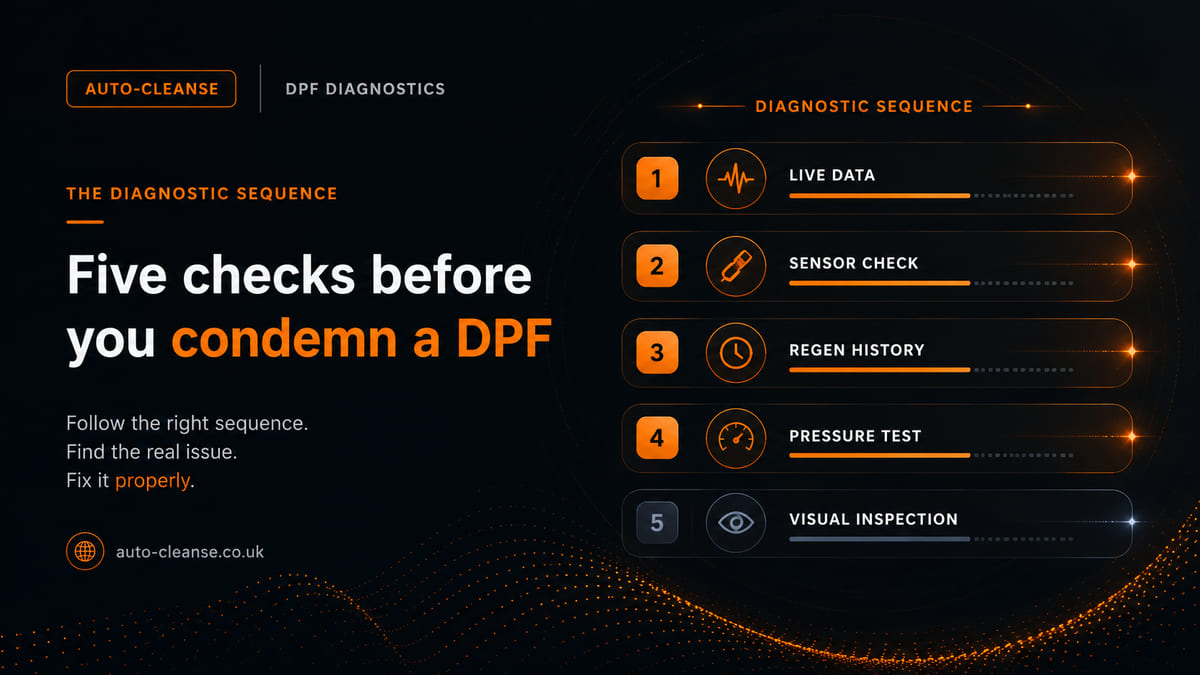
The diagnostic sequence: five checks before condemning a DPF
- Record the full fault picture. Read and record the stored faults, freeze-frame information where available, relevant live data and regeneration history before clearing anything. Air, fuel, EGR, temperature and aftertreatment faults can all change soot production or prevent regeneration - do not start with the filter in isolation.
- Verify pressure sensing. Inspect the sensor connector, wiring and pressure pipes for heat damage, cracking, incorrect routing, disconnection or blockage, and check the exhaust system for leaks. Then test sensor plausibility and response using the manufacturer procedure - prove the reading before trusting it.
- Check temperature plausibility. Confirm that coolant temperature reaches the expected operating range for that vehicle and that exhaust-gas temperature readings are plausible from cold and respond sensibly as load changes. Regeneration depends on trustworthy temperature data, and the exact prerequisites differ by application.
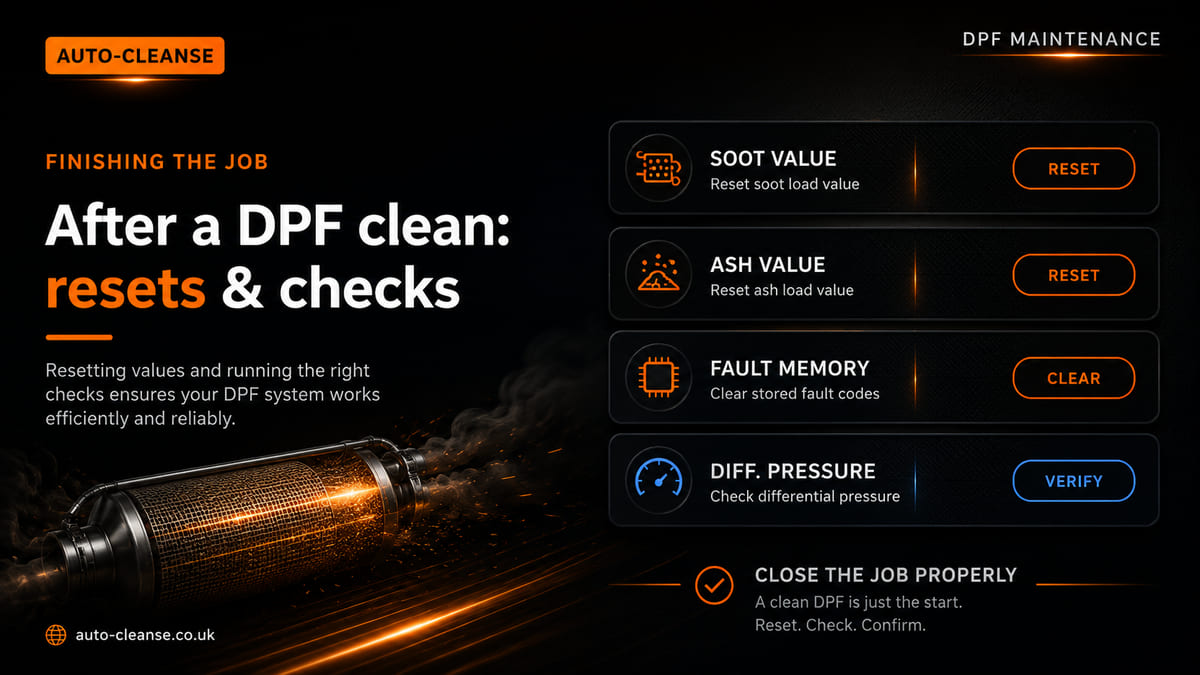
- Separate soot from ash and damage. Regeneration oxidises combustible soot, but non-combustible ash remains and accumulates over time. Pressure evidence needs to be considered alongside soot and ash estimates, mileage, service history and any signs of melting, cracking or contamination.
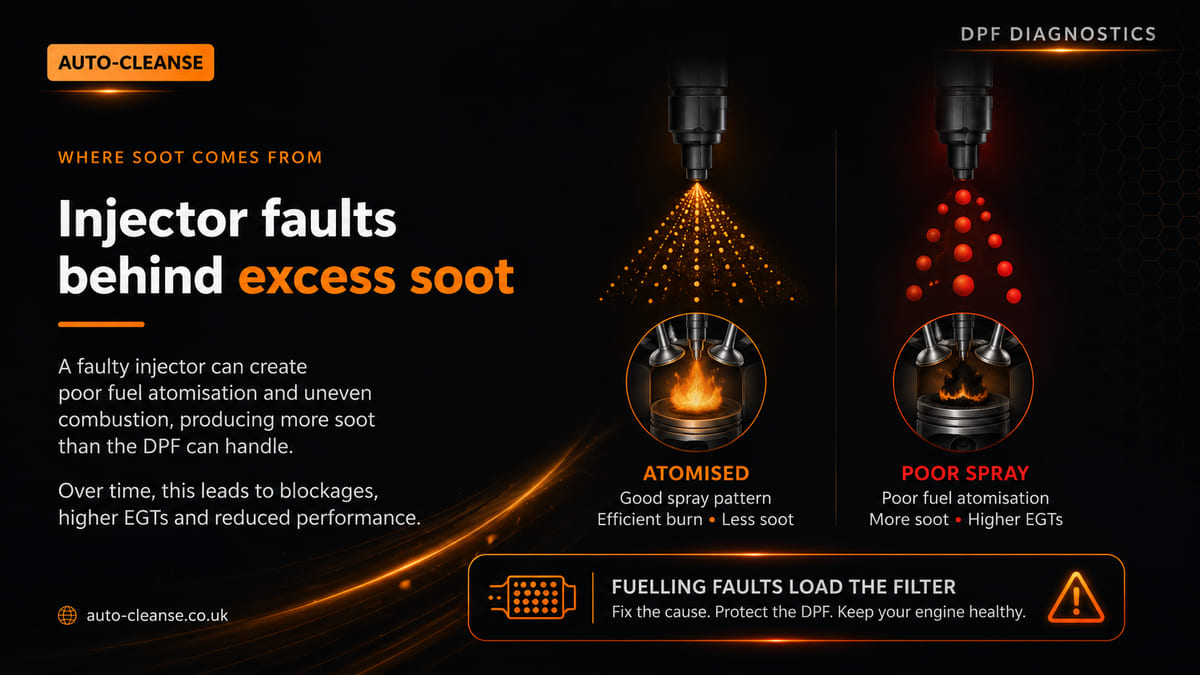
- Find the reason it loaded. Review journey pattern, regeneration frequency and any faults capable of increasing soot or interrupting regeneration. After repairs or an approved DPF clean, repeat the manufacturer test under comparable conditions and confirm that the readings, fault status and regeneration behaviour now make sense.
Common misdiagnosis: A pressure-sensor fault code is not automatically a failed pressure sensor. The sensor, its wiring and its pressure pipework need to be proven before the reading is trusted.
What the evidence may be telling you
- Implausible pressure with the engine off: investigate the sensor circuit, pipework, learned offset and the vehicle-specific test method.
- Pressure rises excessively under the specified flow test: restriction is possible, but soot, ash, contamination and filter condition still need separating.
- Soot is high with active temperature or engine faults: resolve the enabling or root-cause fault before treating regeneration as the repair.
- Pressure remains high after a confirmed soot reduction: investigate ash loading, physical restriction, contamination or measurement error.
The takeaway
A loaded DPF and a failed DPF are not the same diagnosis. The filter decision should be the end of the testing process, not the beginning.
Sources
- HELLA Tech World: Exhaust gas aftertreatment design and diagnostics
- Bosch Mobility: Differential pressure sensor
- Delphi Technologies: DPF differential pressure sensor troubleshooting
- HELLA and Delphi: Exhaust-gas temperature sensor guidance
- Motorservice and Ford: Common causes of incomplete regeneration and increased soot loading
General technical guidance only. Manufacturer-specific workshop information, parameter definitions, test conditions, safety instructions and specifications always take precedence.
Need help with this on your vehicle?
Auto-Cleanse can sort it. See our DPF Diagnostics service, or get in touch.
Related: Blocked DPF Cleaning · DPF Cleaning in Devon