DPF Warning Lights: What Each One Actually Means
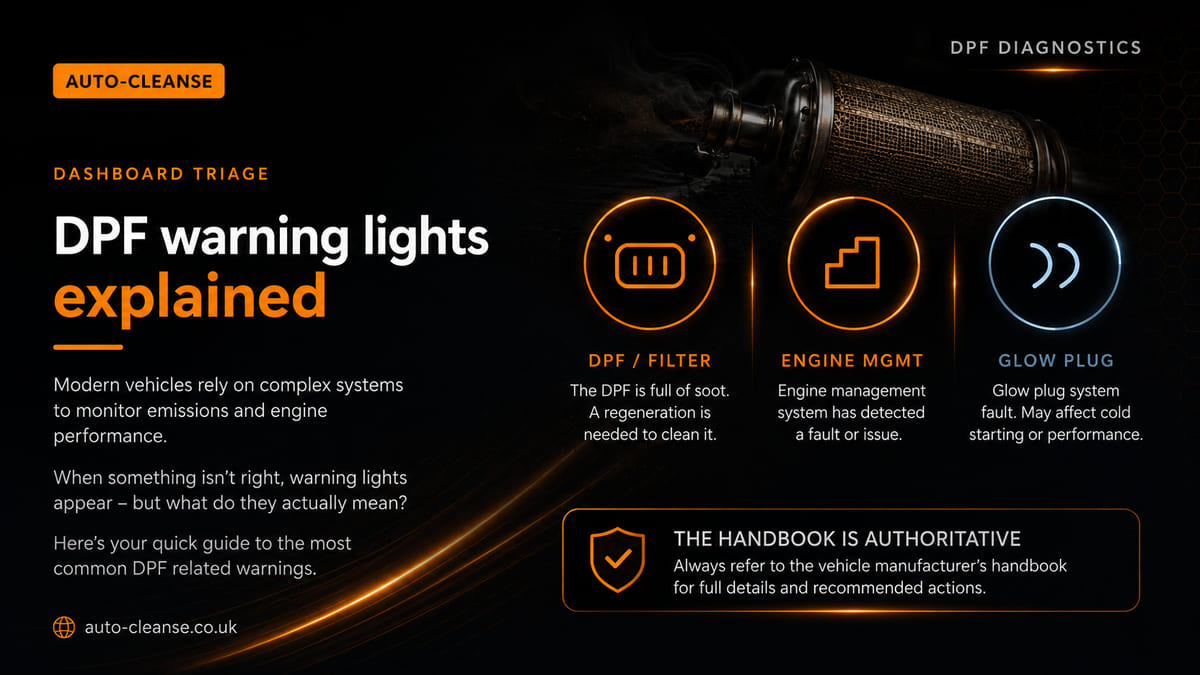
A warning light on a diesel dashboard rarely tells you what has failed. It tells you what the engine management system has decided to escalate, and how urgently. The same underlying condition - a particulate filter approaching its loading limit - can appear as a dedicated filter symbol on one vehicle, a general engine-management lamp on another, and a text message in the driver display on a third.
So the useful first step is working out which category of warning you are looking at, rather than matching the shape of the symbol to something you have seen before. The handbook for your specific vehicle is the authority on what its lamps mean and what the manufacturer wants you to do.
A warning lamp reports that a threshold has been crossed - not which component is at fault.
Why the symbols and strategies differ
Emissions-related malfunction indication is broadly regulated, but the driver-facing detail around a DPF is not standardised. Manufacturers choose their own symbols, colours, wording, staging and driving procedures: some vehicles have a dedicated filter lamp, some use text messages, and some rely entirely on the general engine-management lamp.
The escalation strategy varies just as much. One application may allow a long period of normal driving with a steady lamp illuminated; another may move to restricted performance far sooner. Generic advice is therefore often wrong for the vehicle in front of you - use the handbook, and treat anything else as background context.
The DPF or filter warning light
Where a vehicle has a dedicated filter lamp, it is typically the earliest warning you get. In general terms it indicates one of two situations:
- Soot loading has reached the point where the system wants to regenerate, and the conditions to run or complete that regeneration have not been met.
- A regeneration has been repeatedly started and not allowed to finish, so loading has continued to climb.
Many handbooks describe a specific driving procedure at this stage - typically a period of sustained, steady driving to bring the exhaust up to temperature and let the system complete its cycle. If the manufacturer provides one, follow it exactly rather than approximating it.
If the lamp does not clear after that procedure, or clears and then returns shortly afterwards, the problem has stopped being a driving-style issue and become a diagnostic one - the vehicle needs proper DPF diagnostics rather than more miles.
Signs a regeneration may be running
On many diesels a regeneration in progress is noticeable: a raised or altered idle, the cooling fan running more than usual, a hot smell, a change in exhaust note, stop-start being unavailable and a temporary rise in fuel consumption. None of these are faults in themselves - they are the system doing its job. Repeatedly switching the engine off part-way through is what causes trouble.
The amber engine-management light
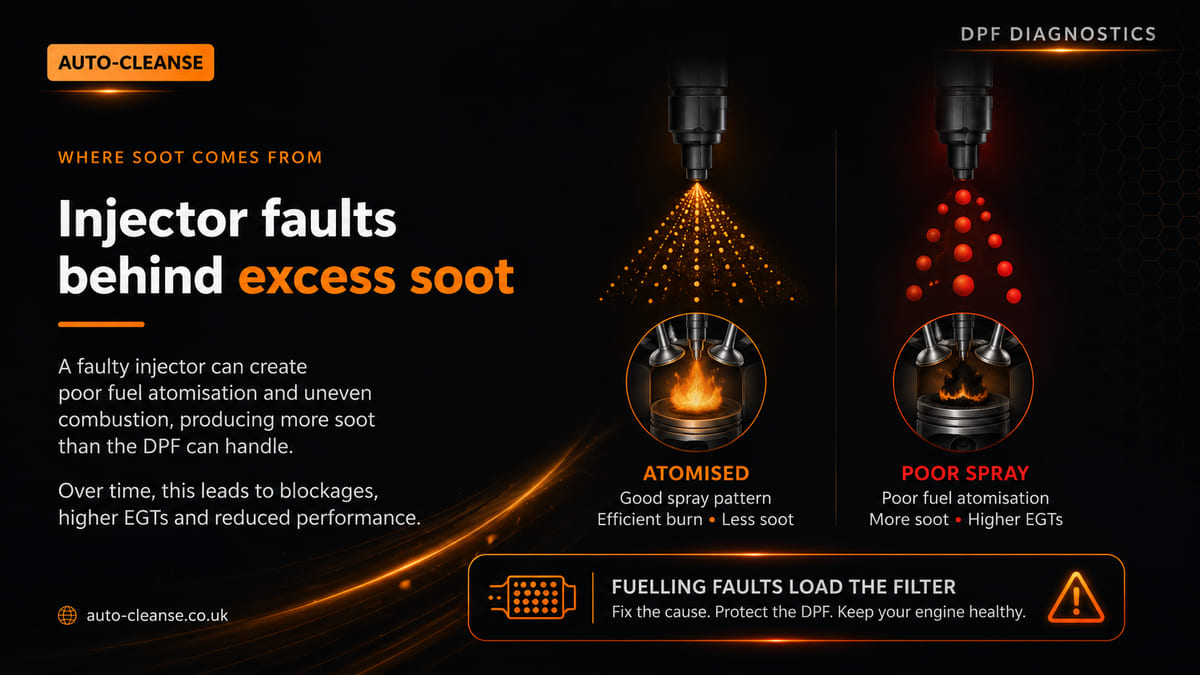
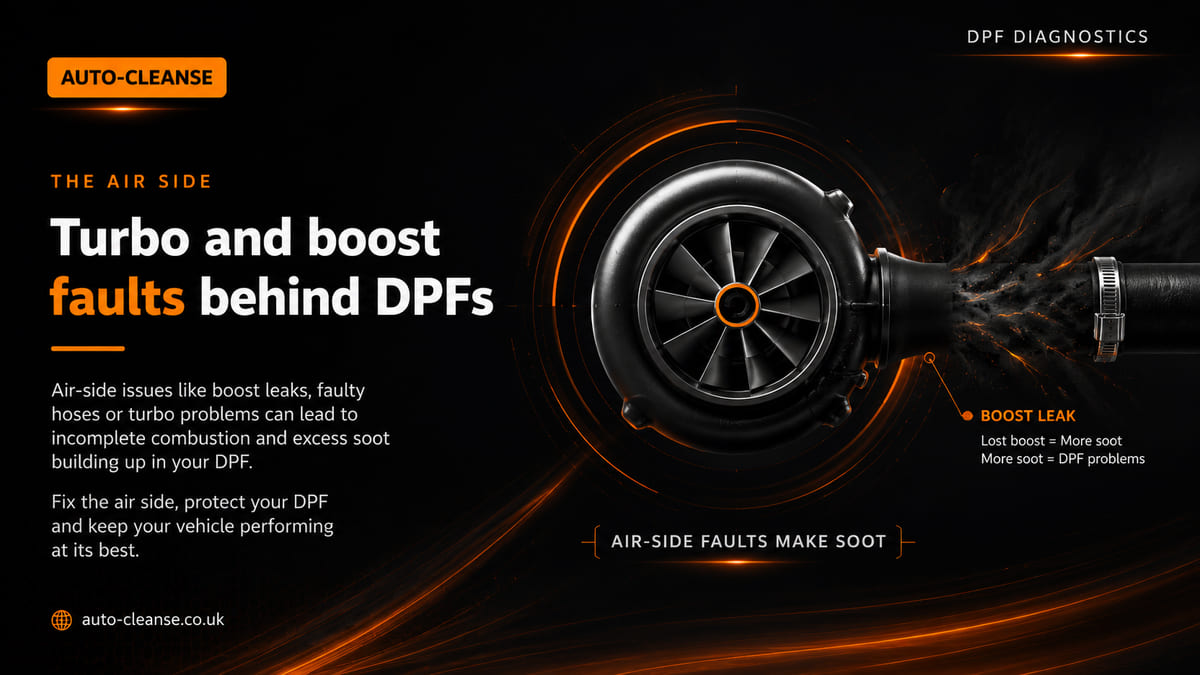
The engine-management lamp - the malfunction indicator lamp - means a fault has been detected and stored, usually an emissions-relevant one, though manufacturers apply the lamp more broadly than that. It is not DPF-specific: it can be triggered by the filter system, but equally by injection, air-management, EGR, sensor or plausibility faults, several of which also cause DPF loading.
A flashing lamp is generally treated as more serious than a steady one, though the precise meaning is defined by the manufacturer. Either way, the lamp on its own tells you almost nothing about the repair - the stored codes, freeze-frame data and live values do.
The glow-plug or preheat light
On many diesels the glow-plug symbol is used for more than preheating. It is normal for it to illuminate on ignition and go out once the preheat cycle completes, but on some vehicles the same lamp flashing after start-up signals a stored engine fault, which may have nothing to do with the glow system itself.
The mistake here is assuming the symbol names the failed part. A flashing coil symbol is a prompt to read the fault memory, not a reason to fit glow plugs.
Limp mode and reduced performance
Limp mode is a deliberate protection strategy, not a breakdown. The ECU restricts torque, boost or speed to limit further damage or emissions once a defined threshold has been passed.
The important point is that restricted running often prevents the system from regenerating at all. Driving on in limp mode will not clear a loaded filter, and the engine carries on producing soot in the meantime. Get the vehicle assessed rather than living with it.
Common misdiagnosis: "The DPF light is on, so the filter needs replacing." The lamp reports a loading or plausibility threshold. Whether the filter is serviceable, ash-loaded or genuinely damaged is a separate question that needs measurement - and where it is restricted rather than damaged, off-vehicle cleaning is often the correct answer.
What not to do
- Do not keep driving in limp mode indefinitely. It rarely resolves itself and can allow a secondary fault to develop.
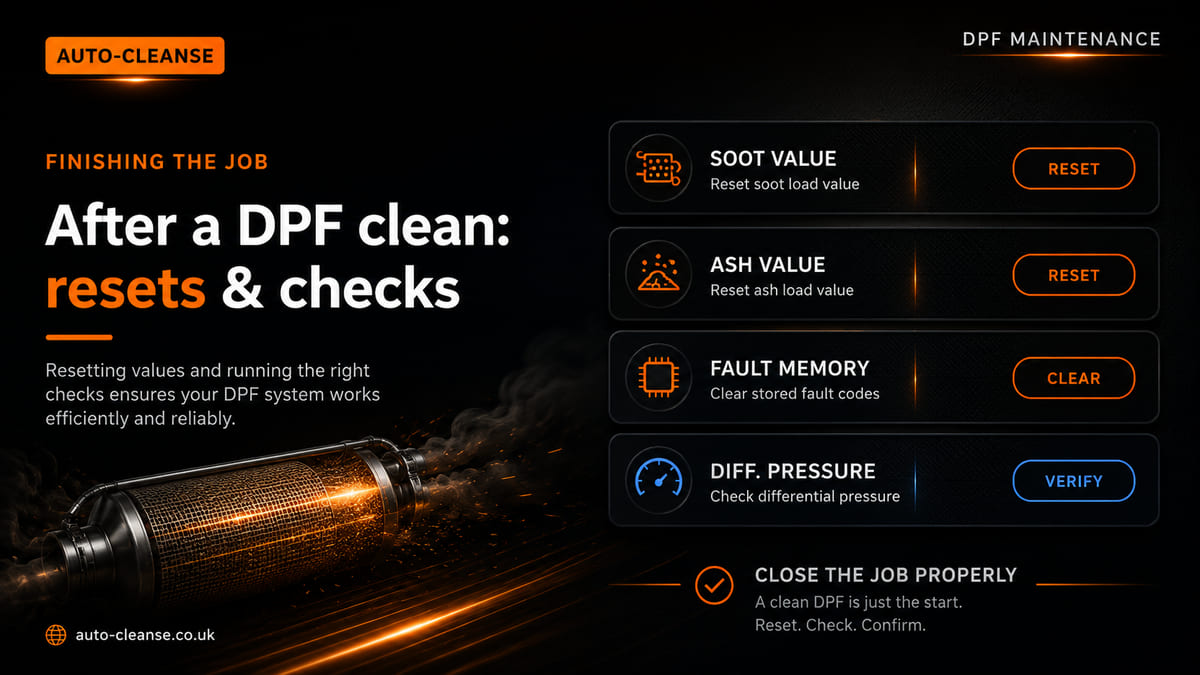
- Do not repeatedly interrupt a regeneration. Shutting down mid-cycle leaves partially burned loading in the filter and, on some applications, contributes to fuel dilution of the engine oil.
- Do not ignore an escalating warning. A steady lamp becoming a flashing lamp, a message, or restricted performance is the system telling you the margin has gone.
- Do not treat a cleared code as a repair. Clearing removes the evidence without changing anything, and a filter that keeps blocking after a regeneration will carry on doing so until the cause is found.
The takeaway
Warning lamps tell you how urgent a problem is, not what it is. Read the handbook for what your vehicle's symbols mean, then read the data before deciding what has actually failed.
Sources
- Bosch Mobility - diesel engine management and exhaust aftertreatment technical information
- HELLA TechWorld - diesel particulate filter system and warning lamp diagnosis
- Delphi Technologies - diesel aftertreatment and regeneration guidance
- Motorservice - particulate filter technical information
General technical guidance only. Manufacturer-specific handbook information, workshop procedures and specifications always take precedence.
Need help with this on your vehicle?
Auto-Cleanse can sort it. See our Blocked DPF Cleaning service, or get in touch.
Related: DPF Diagnostics · DPF Cleaning in Devon